
About Integrated Care 

What Is Integrated Care? 

Integrated care brings together health and social systems to provide seamless, person-centred support. It emphasizes collaboration, communication, and coordination across providers and settings, ensuring individuals and families receive the right services when and where they need them—improving both care quality and system efficiency.
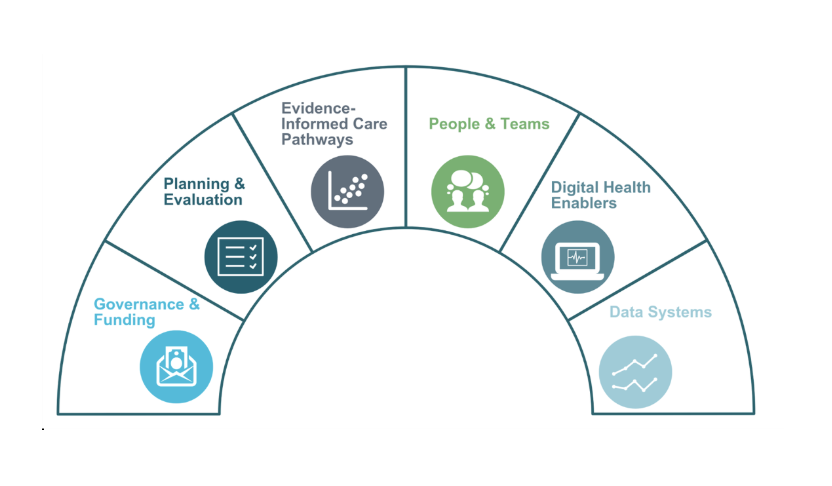
Centre for Integrated Care’s Domains of Integrated Care

  • The Governance and Funding domain describes mechanisms and processes that enable participating partners (e.g., programs, organizations, and systems) to come together in an integrated manner. These mechanisms and processes include shared vision and strategy, accountability structures, funding, and individual, family, caregivers, and community engagement.  

    Projects/work under this domain may explore:  

    • shared vision and strategy between partners 

    • agreements formalizing how partners work together (e.g., risk-sharing, information-sharing, etc.) 

    • funding  

    • the extent to which individuals, families, caregivers, and communities are engaged in the above activities 

  • The Planning & Evaluation domain describes the extent to which the program, organization and/or system and its services align with the characteristics, needs, and preferences of the population they intend to care for to best optimize their health and well-being. Equally important, this domain describes the degree to which evaluation and continuous quality improvement is embedded in the program/organization/system from the outset to ensure that the desired outcomes are realized.   

    *Note: this domain relates to the use of data, not the availability of data (see domain 6: data systems) for planning or evaluation purposes.   

    Projects/work under this domain may explore:  

    • how well services meet the needs of the intended population (e.g., Scope of services offered, accessibility of services, care focus, and continuity of services across settings)  

    • performance measurement standards and indicators 

  • The Evidence-Informed Care Pathways domain describes how best practices are used to inform the organization and sequencing of the care process for a defined population over time.  

    Projects/work under this domain may explore:  

    • standardized assessment systems 

    • common care protocols and pathways 

    • identification criteria 

    • coordination between care providers 

    • navigation support 

  • This domain describes how people, including individuals, caregivers and care providers relate to one another and participate in the care experience. It includes the composition and activities of the care team, including health and social care providers, individuals, and caregivers.  

    Projects/work under this domain may explore:  

    • training and re-education opportunities for care providers to participate optimally and to their full scope of practice 

    • individuals and caregiver self-management, and participate in the care team to their desired level 

    • staff retention and consistency over time 

    • awareness of roles across the care team 

    • shared decision-making and accountability across teams  

    • skills, training, and support (applies to individuals, caregivers, and care providers) 

  • This domain explores how hybrid solutions (e.g., virtual, in-person, phone, online, etc.) are used to support the full participation of individuals and caregivers in their care experience. Digital health enablers expand traditional in-person health delivery to improve access to information, services, and support. Digital health enablers can also be used to monitor complex conditions remotely and detect changes in health earlier to provide timely care interventions.  

    This domain describes the availability of various solutions provided to individuals, families and caregivers, in formats best suited to their needs and preferences. 

    Projects/work under this domain may explore:  

    • the availability of information of public-facing websites (e.g., description of services and programs offered, how to access services, and self-management resources) 

    • online appointment booking 

    • referral-tracking  

    • service self-referral 

    • digital access to medical records 

    • access and sharing of digital medical records 

    • mHealth (mobile)  

    • digital literacy 

  • This domain describes the extent to which common information standards are implemented to enable information sharing. 

    Projects/work under this domain may explore:  

    • Flow, completeness, and timeliness of information in a shared health record 

    • Accessibility of data systems in frontline care settings 

    • Completeness and timeliness of aggregate level information in consolidated data centres 

The Centre for Integrated Care has established platforms to conduct research and provide technical support in all of these domains. The team builds, tests, and evaluates using data science, epidemiology, and digital clinical tools, AI, and other ‘smart systems’ to advance the work.

Our collaboration with partners amplifies the capacity to adopt and evolve the science of integrated care.